Takeaways
- Nattokinase is a fibrinolytic enzyme extracted from natto, a traditional Japanese fermented soybean dish.
- Best-supported benefit: helping to maintain healthy blood pressure already within the normal range, typically at 100 mg (2,000 FU) daily.
- Judge potency by Fibrinolytic Units (FU), not milligrams; a label showing only mg is incomplete.
- Do not combine with warfarin, aspirin, or other blood-thinning medications or supplements without physician supervision, and discontinue at least two weeks before any scheduled surgery.
- Despite promising lab data on amyloid breakdown, human trials on nattokinase and cognitive function have been negative to date.
- Best absorbed on an empty stomach, 30–60 minutes before a meal or two hours after.
- Eating whole natto (not the isolated supplement) is also very high in vitamin K2, a separate consideration for anyone on warfarin.
What is nattokinase?
Nattokinase is an enzyme found in the traditional Japanese food natto. Natto is made from boiled soybeans fermented with a bacterium known as Bacillus subtilis var. natto.
Nattokinase's history traces to 1980, when Dr. Hiroyuki Sumi, a Japanese researcher at the University of Chicago Medical School, was testing natural substances for their ability to dissolve blood clots. After screening more than 170 candidate foods, Sumi placed a sample of natto onto an artificial blood clot in a petri dish and watched it fully dissolve within 18 hours, faster than any pharmaceutical compound he had tested. He formally identified and named the enzyme "nattokinase" in a 1987 paper.1 While natto remains the only food source of the enzyme, research since then indicates that nattokinase supplements provide comparable effects without requiring daily consumption of fermented soybeans.
What are the health benefits of nattokinase?
Nattokinase is primarily used to support cardiovascular health and the body's natural clot-breakdown processes. Because whole natto has a strong aroma and sticky texture, many people find it difficult to eat regularly, so supplements have become a more common delivery method.
How Does Nattokinase Improve Heart Health?
Maintaining cardiovascular health is a primary wellness goal for adults. A significant factor in cardiovascular wellness is fibrinogen, a protein essential to healthy blood clotting but one that requires careful balance to support clear, healthy arteries. Healthy fibrinogen levels are associated with cardiovascular health, and elevated fibrinogen has consistently been identified as an independent risk marker for future cardiovascular disease in large prospective studies.2
Nattokinase supports heart health primarily by breaking down fibrinogen and excess fibrin in blood vessels. At the biochemical level, nattokinase works through multiple pathways: it directly breaks down cross-linked fibrin, converts the body's own prourokinase into active urokinase (which increases plasmin, the body's natural clot-dissolving enzyme), and inhibits plasminogen activator inhibitor-1 (PAI-1), a protein that would otherwise block this process. This multi-pathway action is why researchers describe nattokinase as supporting the body's own fibrinolytic system rather than acting as a single-mechanism blood thinner.3,4
In a randomized, controlled trial, 73 subjects looking to maintain cardiovascular wellness took either 2,000 FU of nattokinase or a placebo daily. After eight weeks, the nattokinase group showed healthy blood pressure within a normal range compared to the placebo. Researchers attributed this to improved blood vessel structure and function rather than a direct anti-hypertensive mechanism.5
Does Nattokinase Improve Cardiovascular Function?
Because nattokinase may help dissolve or prevent clots, supports vascular health, balanced fibrinogen levels, and support healthy cholesterol levels, it's frequently discussed in the context of cardiovascular health.3-6 That said, large-scale, long-term human trials specifically confirming improved cardiovascular wellness are still lacking. It should be treated as part of an overall healthy diet and exercise routine, not as a standalone preventive measure.
Can Nattokinase Reduce Inflammation and Support Recovery?
Beyond cardiovascular effects, nattokinase functions similarly to other proteolytic enzymes such as bromelain and serrapeptidase. By helping manage fibrin turnover, it may support healthy circulation to active muscles and tissues, helping deliver oxygen and nutrients while clearing metabolic byproducts. Human clinical trials testing nattokinase specifically for post-exercise recovery are still lacking, so this remains a mechanism-based benefit rather than a clinically confirmed one.
Does Nattokinase Support Gut Health and Metabolism?
As a fermented food, natto is naturally rich in probiotics, and fermented foods broadly show antioxidant, antimicrobial, and anti-inflammatory activity.7 This benefit applies most directly to eating natto itself; an isolated nattokinase supplement does not carry the same probiotic content as the whole fermented food.
How Does Nattokinase Support Sinus and Respiratory Health?
Ongoing sinus challenges are common in adults and can sometimes be difficult to manage. Researchers at Fukui University in Japan studied nattokinase's effect on nasal passage tissue, since excessive fibrin buildup can contribute to everyday sinus congestion.8
In the laboratory, researchers incubated nasal tissue from individuals experiencing sinus challenges with either saline or nattokinase at 37°C for 24 hours. They then separately incubated nasal discharge and mucus samples with nattokinase for one hour. The nattokinase-treated samples showed measurable fibrin breakdown and reduced mucus viscosity (thickness) compared to the saline control. Researchers noted that this mechanism might also provide support for broader, seasonal respiratory challenges, though this has not been directly tested in those specific populations. Current evidence is limited to these laboratory observations of nasal passage tissue and mucus.
What Does the Evidence Say About Nattokinase and Brain Health?
Amyloid is a type of protein that can accumulate in tissue over time and is frequently associated with age-related cognitive decline. Laboratory studies show nattokinase can directly break down these amyloid structures in vitro.9-11
However, this is where the evidence trail stops for humans. A randomized trial of 120 adults seeking circulatory and cognitive support found that 4,000 FU of nattokinase twice daily for six months produced no significant improvement in cognitive function, memory, or attention compared to placebo.12
Nattokinase vs. Serrapeptidase vs. Lumbrokinase: How Do They Compare?
Nattokinase is one of several fibrinolytic enzymes used for circulatory support, and it's often compared to serrapeptidase and lumbrokinase.
Serrapeptidase, derived from bacteria in the silkworm gut, is generally used more for reducing tissue inflammation, sinus congestion, and post-surgical swelling than for dissolving existing blood clots.
Lumbrokinase, derived from earthworms, is frequently described by supplement manufacturers and some practitioners as substantially more potent than nattokinase. Figures like "30 times stronger" circulate widely. This claim should be read with caution: independent, standardized head-to-head clinical trials comparing the two enzymes are lacking, and most of these comparisons come from marketing material or practitioner anecdote rather than controlled research. For general, long-term cardiovascular support, nattokinase remains the most clinically documented option of the three.
Side effects, safety, and drug interactions
No side effects have been reported in nattokinase clinical trials at typical doses, but the following are documented potential risks:
- Allergic reactions in people with soy allergies
- A theoretical risk that a dissolving clot could relocate to the lungs or brain vessels
- Low blood pressure when combined with blood pressure medication
- Excessive bleeding or bruising.
Beyond these general risks, published case reports describe serious outcomes at high or unmonitored doses: one report documented fatal internal bleeding in an elderly woman who was not taking other blood thinners, and another documented a brain hemorrhage in a woman taking 400 mg daily for one week. These cases underscore that nattokinase's blood-thinning effect is real and not risk-free, even without a drug interaction present.13-15
Drug Interactions
Nattokinase should not be combined with warfarin (Coumadin) or other prescription anticoagulants and antiplatelet drugs, including aspirin, clopidogrel, prasugrel, ticlopidine, and dipyridamole, except under a physician's direct supervision.
Herbal and Supplement Interactions. Beyond prescription medications, nattokinase should also be used cautiously alongside other natural compounds with blood-thinning properties, including ginkgo biloba, high-dose garlic, curcumin (turmeric), and high-dose fish oil/omega-3 supplements. Combining nattokinase with these can unpredictably compound the overall blood-thinning effect.
One distinction worth making clearly: this interaction risk applies to the isolated nattokinase enzyme. Whole natto carries a separate consideration; it is unusually high in vitamin K2, which can directly counteract warfarin's mechanism of action (warfarin works by blocking vitamin K). Someone on warfarin should be cautious about both the supplement (bleeding risk from the enzyme) and the whole food (reduced warfarin effectiveness from the vitamin K) for different reasons.
Surgery
Most healthcare sources recommend discontinuing nattokinase at least two weeks before any scheduled surgery or invasive dental procedure, since its effects on clotting can persist for several days after the last dose.
Pregnancy
There is not enough research to establish safety during pregnancy or breastfeeding; avoid unless a healthcare provider directs otherwise.
Always talk to your doctor before starting nattokinase if you take blood thinners or blood pressure medication, have a bleeding disorder, are pregnant or breastfeeding, or have an upcoming surgery.
Dosing
- Standard consumer dose: 100 mg (2,000 FU) per day for ongoing use
- Long-term high-dose: 540 mg (10,800 FU) per day for 1 year
- Short-term high-dose: 552 mg per day for 4 weeks
- Cognitive trials: 4,000–8,000 FU per day for 6 months
One practical note: nattokinase potency should be judged in fibrinolytic units (FU), not milligrams; mg alone doesn't reflect enzyme activity. Check the label for an FU value.
How should you take nattokinase?
Nattokinase is a protein-based enzyme sensitive to stomach acid, so it's commonly recommended to take it in a delayed-release or enteric-coated capsule on an empty stomach 30 to 60 minutes before a meal, or at least two hours after eating to reduce breakdown before absorption. Taking it with food may reduce how much active enzyme reaches the circulation. As a food, natto can be eaten on its own or added to rice, salads, wraps, or miso soup. As a supplement, it's most often taken as a capsule standardized to FU content.
How to make natto
Makes 12 cups
Ingredients:
- 4 cups soybeans
- 12 cups of water, for soaking
- 2 teaspoons filtered water
- 1 spoonful Nattomoto powder
Instructions:
- Soak the soybeans overnight using three times the amount of water as soybeans. This allows the beans to expand and plump.
- Drain and rinse the soaked soybeans, then cook in an instant pot, pressure cooker, or on the stove until tender. Important: From this point forward, all containers and utensils must be sterilized, or mold and bacteria may develop.
- Drain the cooked soybeans and add to a large, shallow (sterilized) glass, ceramic, or stainless steel mixing bowl or baking dish.
- Mix one spoonful of nattomoto powder with 2 teaspoons of filtered water, then pour over soybeans and mix well.
- Cover the bowl or dish with a sterilized cheesecloth and secure with cooking twine.
- Set the oven to the lowest possible setting—ideally between 100 to 200 degrees Fahrenheit. Place natto in the oven for 24 hours. You can also use a yogurt maker, food dehydrator, or fermentation box.
- Remove from the oven and allow to cool for two hours, then cover and place in the fridge overnight.
- Store natto in the fridge for up to 2 days or portion it into freezer-safe containers and freeze.
What nutrients does natto provide?
Natto is rich in fiber, protein, manganese, iron, copper, magnesium, calcium, vitamin C, potassium, zinc, selenium, and B vitamins. It is also, by a wide margin, the richest dietary source of vitamin K2 in the MK-7 form.16 Regular natto provides roughly 775 mcg of MK-7 per 100g, far more than any other common food. MK-7 supports the activation of proteins involved in calcium regulation, helping direct calcium toward bone rather than arterial tissue. This is a distinct nutritional benefit from nattokinase's fibrinolytic activity, and it's the reason whole natto carries the separate warfarin caution noted above.
Natto Nutritional Benefits (per 100g serving)
- Calories: 211
- Protein: 19 g
- Fiber: 5.4 g
- Fat: 11 g
- Carbohydrates: 13 g
- Vitamin C: 13 mg
- Iron: 8.6 mg
- Potassium: 729 mg
- Calcium: 217 mg
FAQ
Is nattokinase safe to take every day?
Yes, at the standard studied dose of 100 mg (2,000 FU) daily, nattokinase is safe. It should be used with caution under direct medical supervision in people on blood thinners or antiplatelet drugs.
What's the difference between nattokinase and natto?
Natto is a whole fermented soybean food; nattokinase is the enzyme within it. Natto also carries very high levels of vitamin K2, which a nattokinase supplement (isolated enzyme) does not.
Can I take nattokinase with aspirin? Not without medical supervision, both affect clotting, and combining them can increase bleeding risk.
How long before surgery should I stop taking nattokinase?
Most sources recommend discontinuing at least two weeks before any scheduled surgery or invasive dental procedure.
Why do labels show FU instead of just milligrams?
FU (fibrinolytic units) measures actual enzyme activity. Milligram weight alone doesn't tell you potency.
Does nattokinase help with memory or age-related cognitive decline?
Not based on current evidence, human trials over six months found no cognitive benefit despite promising lab-level data on amyloid breakdown.
Should I take nattokinase with food or on an empty stomach? For best results, nattokinase should be taken in a delayed-release (DR) or enteric-coated capsule on an empty stomach 30–60 minutes before eating, or two hours after.
Can pregnant women take nattokinase?
Not recommended; safety during pregnancy or breastfeeding hasn't been established.
Is nattokinase stronger than serrapeptidase or lumbrokinase? Nattokinase has the most published human clinical data of the three. Lumbrokinase is often marketed as more potent, but that claim mostly comes from anecdotal and marketing sources rather than controlled head-to-head trials.
Can I take nattokinase with ginkgo biloba or fish oil supplements?
Use caution. Both have their own blood-thinning properties, and combining them with nattokinase can unpredictably increase overall bleeding risk.
If I'm on warfarin, are natto or nattokinase supplements riskier?
Both carry risk, but for different reasons: the supplement's enzyme activity raises bleeding risk, while whole natto's high vitamin K content can reduce warfarin's effectiveness. Neither should be started without your doctor's involvement.
The Bottom Line
Nattokinase's best-supported benefits are cardiovascular, specifically, helping to maintain healthy blood pressure already within the normal range and supporting healthy circulation and blood flow. These are achieved through a multi-pathway effect on the body's own fibrinolytic system, with plausible but less-established effects on sinus health, a healthy inflammatory response, and metabolism. Brain-health claims are not yet backed by positive human trials. Compared to other fibrinolytic enzymes like serrapeptidase and lumbrokinase, nattokinase has the most published human clinical data for general cardiovascular support.
Because it influences circulatory pathways, anyone on blood thinners or blood pressure medication, anyone pregnant or breastfeeding, and anyone with upcoming surgery should talk to a healthcare provider before starting it.
References:
- Sumi H, Hamada H, Tsushima H, et al. A novel fibrinolytic enzyme (nattokinase) in the vegetable cheese Natto. Experientia. 1987;43(10):1110-1.
- Fibrinogen Studies Collaboration. Collaborative meta-analysis of prospective studies of plasma fibrinogen and cardiovascular disease. Eur J Cardiovasc Prev Rehabil. 2004;11(1):9-17.
- Chen H, McGowan EM, Ren N, et al. Nattokinase: A Promising Alternative in Prevention and Treatment of Cardiovascular Diseases. Biomark Insights. 2018;13.
- Granito M, Alvarenga L, Ribeiro M, et al. Nattokinase as an adjuvant therapeutic strategy for non-communicable diseases. Expert Rev Cardiovasc Ther. 2024;22(10):565-574.
- Kim JY, Lee JH, Paik JK, et al. Effects of nattokinase on blood pressure: a randomized, controlled trial. Hypertens Res. 2008;31(8):1583-8.
- Weng Y, Yao J, Sparks S, Wang KY. Nattokinase: An Oral Antithrombotic Agent for the Prevention of Cardiovascular Disease. Int J Mol Sci. 2017;18(3):523.
- Şanlier N, Gökcen BB, Sezgin AC. Health benefits of fermented foods. Crit Rev Food Sci Nutr. 2019;59(3):506-527.
- Takabayashi T, Imoto Y, Sakashita M, et al. Nattokinase, profibrinolytic enzyme, effectively shrinks the nasal polyp tissue and decreases viscosity of mucus. Allergol Int. 2017;66(4):594-602.
- Hsu RL, Lee KT, Wang JH, et al. Amyloid-degrading ability of nattokinase from Bacillus subtilis natto. J Agric Food Chem. 2009;57(2):503-8.
- Metkar SK, Udayakumar S, Girigoswami A, Girigoswami K. Natural serine proteases and their applications in combating amyloid formation. ADMET DMPK. 2024;12(6):797-820.
- Naik S, Katariya R, Shelke S, et al. Nattokinase prevents β-amyloid peptide (Aβ1-42) induced neuropsychiatric complications. Eur J Pharmacol. 2023;952.
- Zhang K, Zhang X, Wang A, et al. Nattokinase supplementation for cognitive enhancement in asymptomatic intracranial/carotid stenosis: A randomized controlled trial. J Stroke Cerebrovasc Dis. 2026;35(1):108511.
- Gallelli G, Di Mizio G, Palleria C, et al. Data Recorded in Real Life Support the Safety of Nattokinase in Patients with Vascular Diseases. Nutrients. 2021;13(6):2031.
- Kurosawa Y, Nirengi S, Homma T, et al. A single-dose of oral nattokinase potentiates thrombolysis and anti-coagulation profiles. Sci Rep. 2015;5:11601.
- European Food Safety Authority. Safety evaluation of nattokinase as a novel food ingredient. EFSA Journal.
- Afzaal M, Saeed F, Islam F, et al. Nutritional Health Perspective of Natto: A Critical Review. Biochem Res Int. 2022;2022.
DISCLAIMER:
These statements have not been approved by the Food and Drug Administration. These products are not intended to diagnose, treat, cure or prevent disease.








































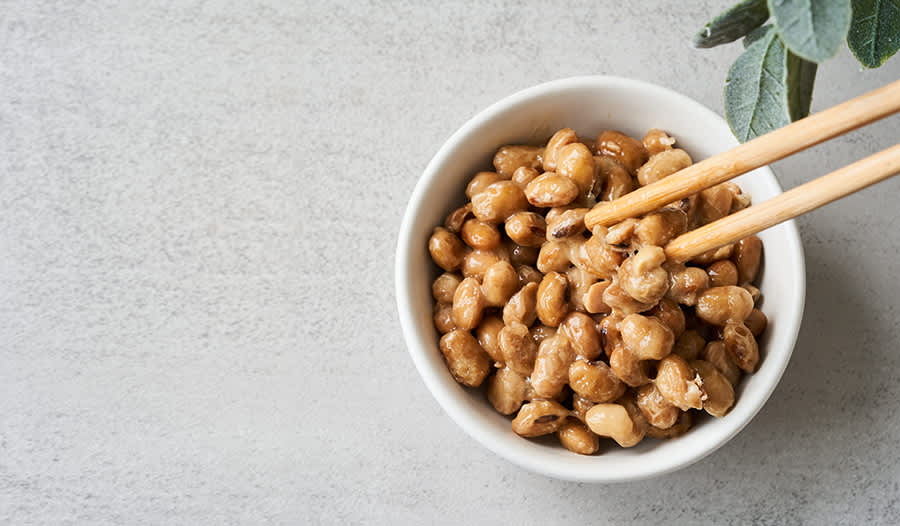
 Table of Contents